
Skip to content
Free written estimatesLocal crews
Call now (813) 555-0185
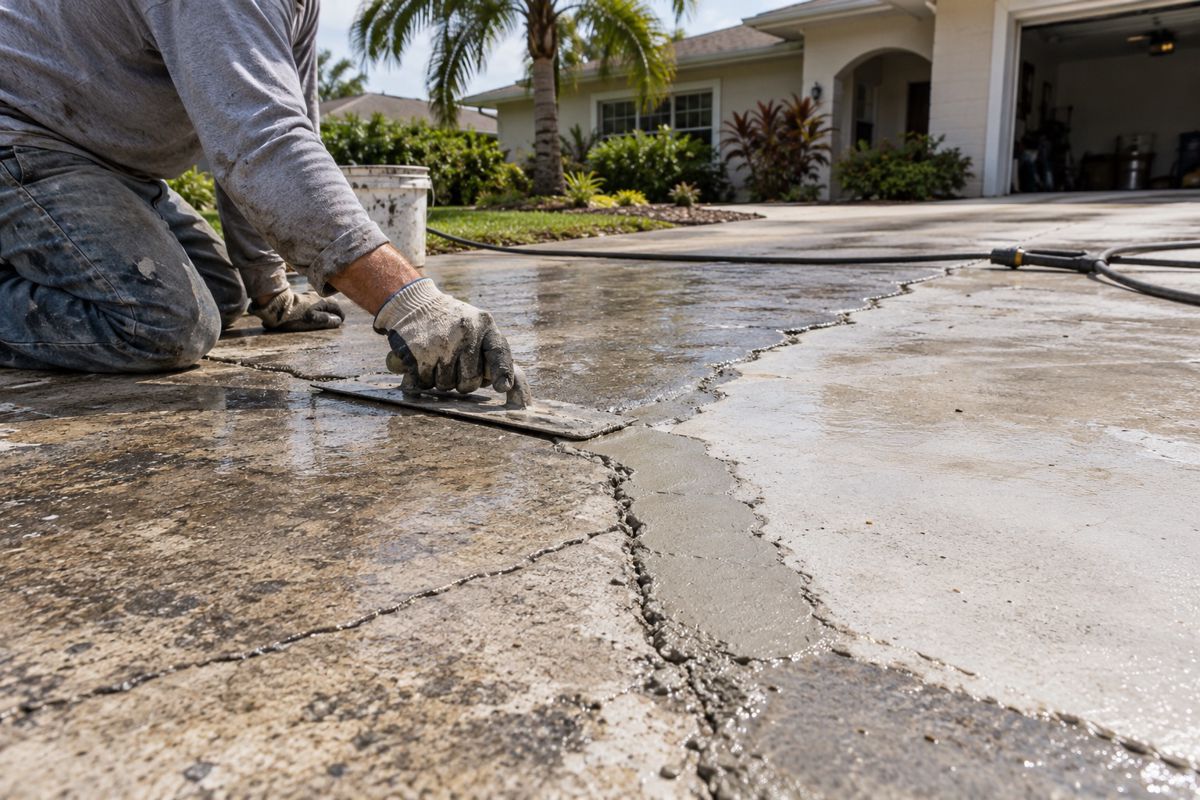
Gloved hands patching a cracked concrete driveway slab in Florida sunshine

Repair and resurfacing in Tampa, FL

Concrete repair in Tampa for cracks, sunken slabs and worn surfaces

Not every damaged slab needs to be torn out. We look at the cause first, then tell you whether to repair, resurface or replace.

  • Cracks, spalling, sunken and uneven slabs
  • Honest advice on repair versus replacement
  • Driveways, patios, walks, garage floors and pool decks

Step 1 of 3

What do you need?

What counts as concrete repair, and what can be fixed?

Concrete repair covers a wide range of problems. Some are cosmetic and some are not. The most common jobs are cracks in driveways, patios and garage floors, surface flaking called spalling, and slabs that have settled or lifted. Worn or stained surfaces on pool decks and walkways are also common.

Hairline cracks are normal and are often just filled and sealed to keep water out. Wider cracks, especially ones where one side sits higher than the other, tell us something under the slab has moved. That needs more than a filler.

Resurfacing is a thin new layer bonded to a sound old slab. It can refresh the color and texture and hide surface wear, but it does not fix movement. If the slab is level and solid, resurfacing is a good value. If not, the repair has to start underneath. See the home page for the other work we do.

Should you repair, resurface or replace the slab?

A simple way to decide is to check three things: movement, depth of damage, and extent.

  • Movement. If the slab is level and solid, repair or resurfacing may work. If it has sunk, tilted or heaved, the cause must be fixed.
  • Depth. Surface scaling and stains can be resurfaced. Cracks that go all the way through need to be filled or the section replaced.
  • Extent. A few problem spots can be fixed one by one. If most of the slab is damaged, replacement costs less over the long term.

Some uneven slabs can be raised back to level by pumping a foam material beneath them, or the trip edge can be ground smooth. Others need to be removed and poured again. If replacement is the right answer, we will say so, and you can read about full driveway installation or new walkways. We do not push you toward the bigger job.

Why does concrete fail in Tampa?

A few local conditions cause most of the damage we see. Understanding them also helps keep a repair from failing again.

Sandy soil washes out under slabs when water runs along the edge. Downspouts that empty onto concrete and sprinklers that spray the edge are common causes. Heavy summer rain makes this worse, and the water table in many areas stays high.

Tree roots lift slabs and crack walkways. Strong sun and heat expand and contract the surface every day. Pool decks face chlorine and salt, which wear the surface and the sealer.

Steel inside the slab can also rust in a humid climate. The rust expands, pushes off the concrete above it, and leaves rust-colored stains along cracks. That is a sign the damage will spread unless the steel is treated and the area patched properly.

Repair quotes depend on what is wrong, not just how big the slab is. These factors usually matter most.

  • Cause of the damage, and whether it must be fixed before the repair.
  • Amount of cracking, spalling or settling.
  • Method: crack filling, patching, grinding, lifting or a full overlay.
  • Surface prep, such as pressure washing and removing old sealer or coatings.
  • Finish and color of any resurfacing.
  • Access and the size of the area.

Most repair jobs take one to three days. Crack filling and grinding can often be done in a few hours. Overlays take longer, because the surface must be cleaned, primed and given time to cure. Heavy rain, as in a Tampa summer, may push the finishing steps to another day. Ask for a written scope and a plain explanation of what each method will and will not fix.

What should you expect on the day, and when should you call?

On the day, the crew cleans the area, marks the repairs, and works through them in order. Expect some noise from grinders and pressure washers. Dust is kept down with water, and nearby plants and windows are covered if needed. Patches and overlays need time to dry, so you will be asked to stay off the area.

Call when you notice a crack that is growing, a slab that tilts toward the house, a step that has pulled away, a raised edge that catches feet, or rust stains along cracks. Call early, because water gets into small cracks and does more damage each rainy season. If you are planning to add color or pattern to an old patio, ask us about decorative concrete as well.

How it works

  1. Tell us about the project

    Size, finish and goals.

  2. Site visit and quote

    We measure and price it in writing.

  3. Form, pour, finish

    Base, forms and finish done in the right order.

What you can expect

1

Free written estimates

2

Local crews

3

Clear timelines

4

Site cleanup included

Request concrete repair

Tell us what you need and we call you back.

No obligation.

Step 1 of 3

What do you need?

Questions about concrete in Tampa

Are cracks in my concrete driveway a serious problem?

Hairline cracks are normal and usually only cosmetic. Cracks wider than a quarter inch, cracks where one side is higher than the other, or cracks that grow quickly point to movement or poor drainage under the slab. Those should be checked soon, because water gets in and makes them worse in the next wet season.

Can a sunken concrete slab be lifted instead of replaced?

Often, yes, if the slab itself is in good shape. A foam material pumped under the slab can raise it back to level. If the slab is badly cracked, or the ground keeps washing out, replacement is the better long-term choice. We check the cause during the site visit and tell you which route fits.

What is the difference between resurfacing and replacing?

Resurfacing adds a thin bonded layer over a sound slab to refresh the look. Replacing removes the slab and pours a new one. Resurfacing costs less and takes less time, but it will not fix movement or deep cracks. If the slab is level and solid, resurfacing is worth considering.

Why is my concrete flaking and peeling on the surface?

This is called scaling or spalling. Common causes include poor finishing, water getting under the surface, rusting steel, and harsh cleaning chemicals. Light scaling can often be resurfaced. Deeper spalling may need patching first. We look at how deep the damage goes and whether rust is involved.

Will repaired concrete match the old color?

Patches rarely match perfectly, because old concrete has weathered and stained. For small repairs, we can tint the patch to blend in. For larger areas, resurfacing or staining the whole slab gives an even look. We show you samples before we start so you know what to expect.

Ready when you are

Call now or request a quote online.

(813) 555-0185